
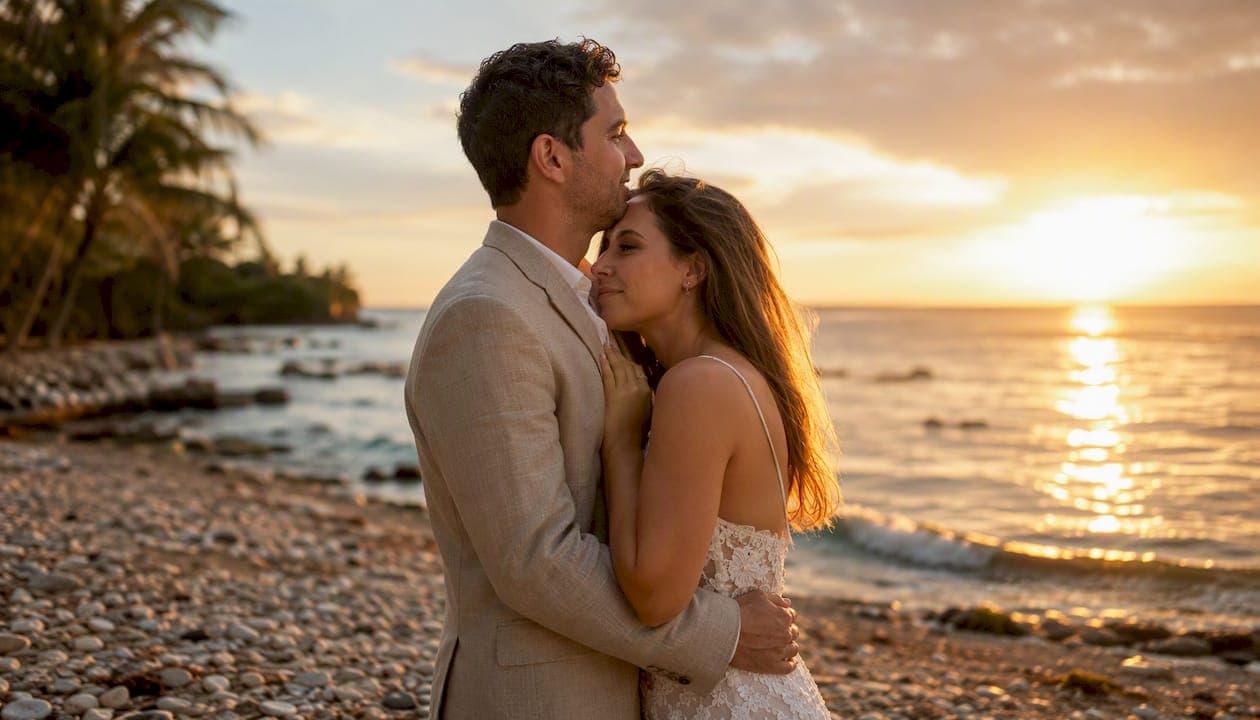
The fastest route to reliably stunning sunset wedding photos is a short, scouted portrait slot timed to local sunset, a photographer briefed with a three-point shot list, and a location chosen for its sun angle. Get those three things right and everything else, poses, settings, backup plans, falls into place.
Your checklist:
- Book a short 15 to 20 minute slot timed about half an hour before local sunset
- Scout the spot in advance (or check it the morning of)
- Send your photographer a short shot list and mood note
- Have a wind and cloud backup ready
Key Takeaways
Reliable sunset wedding photos come down to a scouted 15 to 20 minute portrait slot timed 30 minutes before sunset, backed by a clear shot list and a photographer briefed on your must-haves.
| Point | Details |
|---|---|
| Time it right | Book portraits around 30 minutes before local sunset for a 15 to 20 minute golden-hour slot. |
| Brief your photographer | Send a short shot list and mood note rather than dictating exact camera settings. |
| Scout the location | Check sun angle, reflective surfaces, and a wind-sheltered backup before the day. |
| Dress for the light | Choose warm neutrals and flowing fabrics like silk or chiffon over neon or matt fabrics. |
| Book coverage that includes sunset | Pixelspro builds a scouted golden-hour slot into full-day wedding packages so timing isn't left to chance. |
Table of Contents
- What is golden hour, and how is it different from sunset?
- When should you schedule sunset couple photos?
- Choosing your spot and briefing your photographer
- Handling wind, clouds and changing light
- What to wear for the best sunset photography
- Your 12-point sunset photo checklist
- Using reflectors and fill light at sunset
- What matters most when the light starts fading
- How Pixelspro handles your golden-hour slot
- Useful tools for planning your sunset shots
- Frequently asked questions
- Sources
What is golden hour, and how is it different from sunset?
Golden hour is the hour before sunset, when the sun sits low enough to throw soft, warm, directional light without the harshness of midday sun. Sunset itself is a single moment, when the sun disappears below the horizon, and it can paint the sky in ways golden hour alone doesn't. They're related but not identical, and understanding the difference changes how you plan your evening.
The physics helps explain why the light flatters everyone. Low-angle sunlight travels through more atmosphere, scattering blue wavelengths and letting red and orange tones dominate. That's why skin looks warmer, shadows soften, and skies can turn dramatic without any editing.
What to look for when you're scouting:
- A warm rim of light outlining hair or shoulders (backlight)
- Soft, golden side light that flatters skin tones without harsh shadows
- Clouds picking up colour rather than sitting flat and grey
When should you schedule sunset couple photos?
Most photographers work to a simple rule: book portraits around 30 minutes before sunset, then grab a short follow-up right at sunset if the sky is putting on a show. A 15 to 20 minute window is usually enough once the spot is scouted and you're not wasting time hunting for a backdrop.
Calculate your actual sunset time for the date and location using a sun-tracking app, then check what stands between you and the horizon. A tree line, hill, or building can eat 15 to 20 minutes off your usable light before the "official" sunset time even arrives.
Two sample timelines that work:
- Standard flow: ceremony, then cocktail hour, then a 15 to 20 minute golden-hour portrait slot pulled from the middle of cocktail hour, back in time for entrances.
- First-look flow: photos earlier in the afternoon during a first look, freeing up an extended, unhurried portrait session right at sunset with no clock pressure.
Pro Tip: Tell your planner or coordinator to quietly pull you and your photographer aside 30 minutes before sunset. Most guests won't even notice you've gone, especially if it happens during cocktail hour when people are mingling.
Choosing your spot and briefing your photographer
Look for a location with an open view of the horizon, nothing blocking the low sun, plus something reflective nearby: water, glass, pale stone, that bounces extra light back onto your faces. Check it's an easy walk from your reception (nobody wants a 10-minute hike in heels), and have a covered fallback in mind if the wind picks up.
A ready shot list, copy this into an email to your photographer:
- Wide shot with full sky and silhouette
- Close, intimate portrait with warm side light
- Backlit shot with rim light around both of you
- Full silhouette against the horizon
- Veil or dress caught mid-movement
- Walking hand-in-hand toward the camera
- Seated, candid moment with sky as backdrop
- One unposed, genuine laugh or glance
Your briefing only needs four lines: the mood you want, your must-have shots, your available time window, and anything limiting movement (injury, heels, a long train). If you can, walk the location yourself the week before, or at minimum check it the morning of the wedding. Light and shadow shift daily, and venue landscaping changes faster than you'd think.
Pro Tip: Practising your sunset portraits during your engagement shoot tests the location and timing in advance, so your wedding-day slot runs efficiently instead of improvising on the spot.
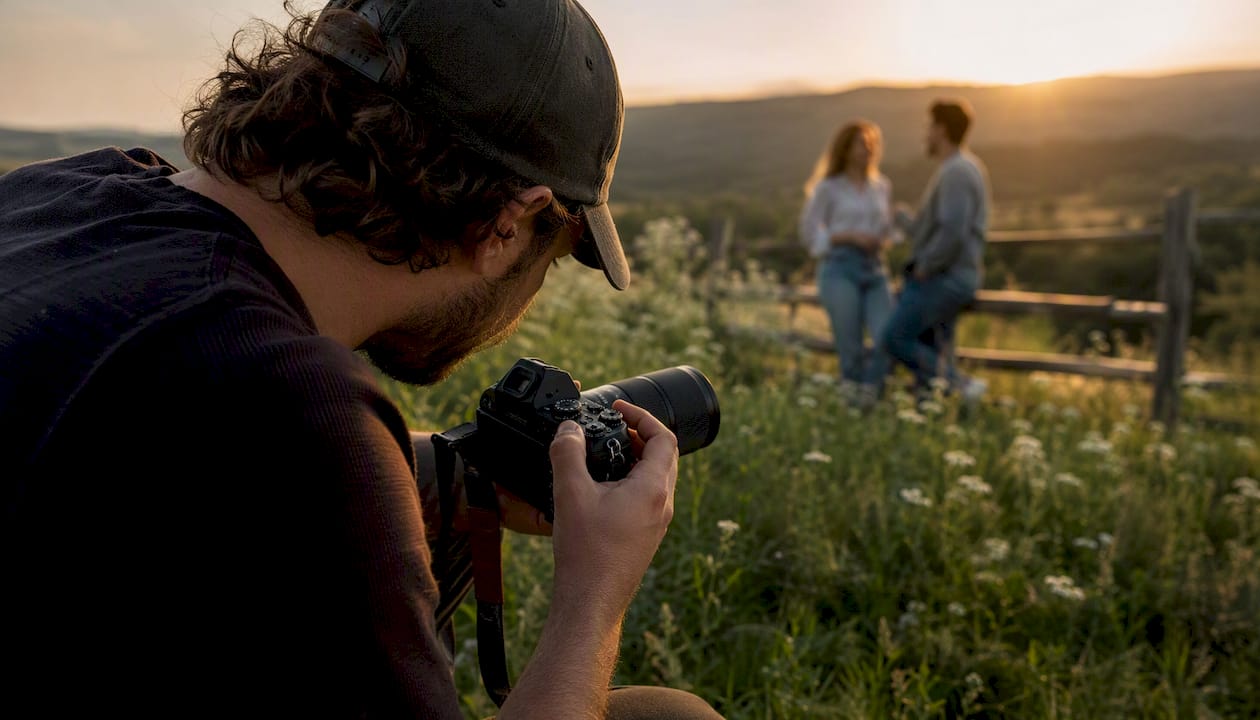
Camera and phone settings for warm, low light
If your photographer is asking what you want, or you're shooting some of it yourselves, here's what actually works once the sun drops low.
For a proper camera:
- Wide aperture (f/1.8 to f/2.8) to keep the background soft and let in more light
- Shutter speed no slower than 1/125 to avoid motion blur from movement or breeze
- Keep ISO as low as the light allows, raise it rather than risk a blurred shot
- Set white balance to "shade" or "cloudy" to exaggerate the warm tones rather than neutralise them
- A wide lens (24 to 35mm) captures sky and landscape; an 85mm flatters faces and blurs backgrounds beautifully
For phones:
- Lock exposure and focus by tapping and holding on your subject
- Use portrait mode sparingly, it can struggle with backlit edges and hair
- Avoid heavy "warm" filter presets, they clash with light that's already warm
- Angling slightly toward the sun creates natural lens flare without a filter
Rather than telling your photographer exact numbers, describe the look you want, warm and glowy, or crisp and golden, and let them translate that into settings. That's what they're trained for.
Pro Tip: If you love a particular sunset photo you've seen online, send it rather than describing it. A single reference image says more than three sentences of description ever will.
Poses and creative shots that work best at golden hour
The best sunset shots rarely look posed. Try these:
- A backlit kiss with a golden rim of light around both your heads
- A full silhouette, walking or standing at the horizon line
- Your veil or dress caught mid-movement in the breeze
- Walking hand-in-hand directly toward the camera
- A seated, relaxed moment with the sky filling the frame behind you
Composition matters as much as the pose. Keep the horizon low in the frame to leave room for sky, use the rule of thirds rather than centring yourselves dead-centre, and look for a leading line, a path, a fence, a shoreline, to draw the eye toward you.
Instead of "stand here and smile," try prompts: whisper something funny, walk and then turn back, or just hold each other and stay still for ten seconds. Genuine reactions photograph far better than a held pose.
Handling wind, clouds and changing light
Cloud cover isn't a disaster, it often produces richer, more painterly colour than a clear sky, so lean into moody tones rather than chasing a perfectly clear horizon. Wind under about 15mph can actually add movement to a veil or dress; beyond that, your photographer may reposition you, use a sheltered spot, or suggest working the movement into the shot rather than fighting it.
If conditions turn genuinely bad, rain, gale-force wind, your photographer should have a covered backup already identified. A small reflector or portable LED panel can fill in shadows once the sun has properly gone.
Pro Tip: Pack travel-size hairspray in your emergency kit specifically for the portrait slot. Thirty seconds of touch-up before you walk out saves an entire gallery of photos.
What to wear for the best sunset photography
Earth tones, warm neutrals, and muted jewel colours (terracotta, sage, dusty blue) hold up beautifully against a golden sky. Avoid neon brights and heavily reflective or sequinned fabrics, they can throw off your camera's exposure and clash with the warm palette.
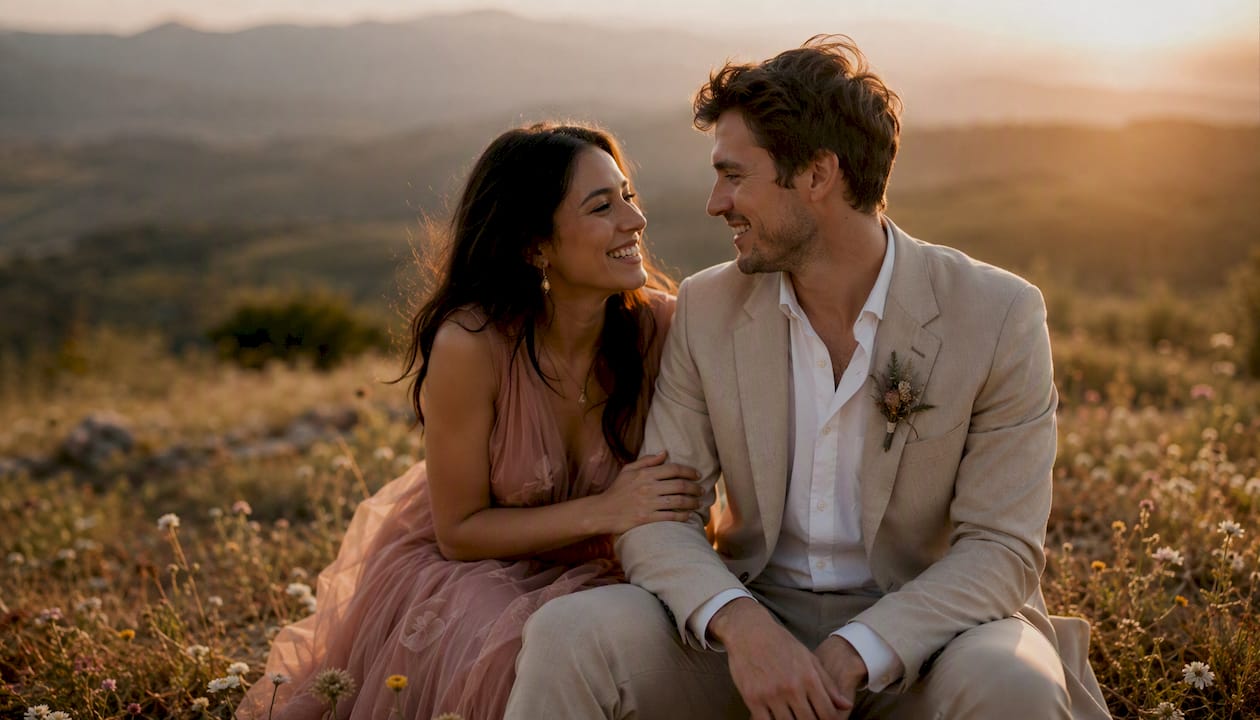
Flowing fabrics like silk and chiffon catch the breeze and add movement to photos; stiff, heavy matt fabrics tend to sit flat and lifeless by comparison. Coordinate your bridal party loosely around one palette rather than an exact match, and small props, a linen shawl, a loose floral arrangement, add texture without competing with the sky.
Your 12-point sunset photo checklist
- Confirm exact local sunset time for your date
- Scout the location in advance
- Book a 15 to 20 minute slot 30 minutes before sunset
- Send your photographer a shot list
- Brief them on mood, must-haves, and mobility limits
- Identify a wind-sheltered backup spot
- Pack travel hairspray
- Check for a reflective surface nearby (water, glass)
- Confirm your coverage hours include sunset
- Tell your coordinator to pull you away quietly
- Pick outfits in warm, muted tones
- Choose one flowing fabric piece (veil, shawl, wrap)
Using reflectors and fill light at sunset
Once the sun starts dipping toward the horizon, the light gets beautiful but unpredictable, and that's exactly when small lighting supplements earn their keep. A basic reflector, gold or white, bounces the last of the sun's warmth back into shadowed areas of your faces, particularly useful if one of you is facing away from the light while the other catches it directly.
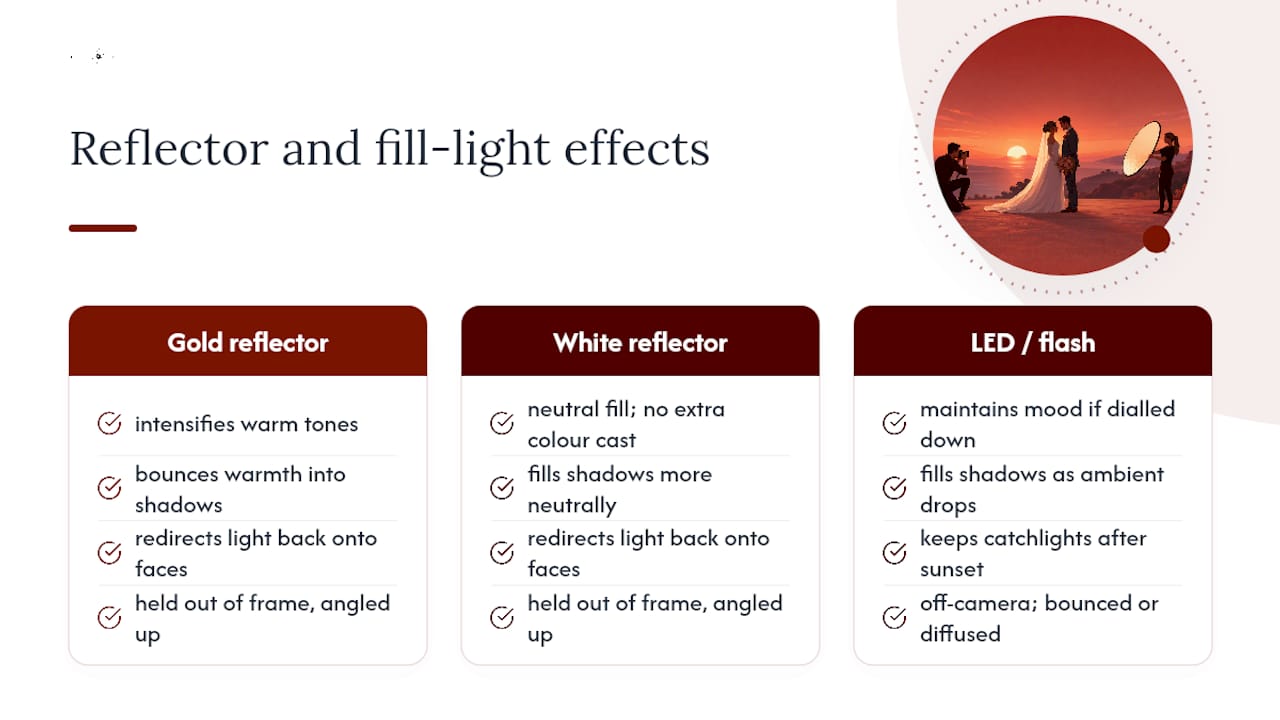
Gold reflectors intensify the warm tones already in golden-hour light, while white reflectors fill shadows more neutrally without adding extra colour cast. Your photographer will usually have an assistant hold one just out of frame, angled to bounce light back up into your faces rather than flatten the shot entirely.
As the sun actually sets and the ambient light drops further, a small LED panel or off-camera flash can maintain exposure without losing the mood. The trick is dialling the flash down so it fills shadows rather than overpowering the natural glow, nobody wants a portrait that looks like it was shot with a torch. A touch of fill flash, bounced or diffused, keeps catchlights in your eyes even after the sun has properly gone.
If you're shooting without a professional reflector, anything pale and large works in a pinch: a white bedsheet, a light-coloured coat, even a phone screen at close range for a subtle catchlight. The goal is simply redirecting whatever light remains back onto the subject rather than losing detail into shadow. None of this requires expensive kit, just someone willing to hold something reflective at the right angle for two minutes.
What matters most when the light starts fading
If there's one thing worth obsessing over, it's timing, not gear, not poses, not even the location. A scouted, well-briefed 15 to 20 minute window beats an hour of wandering and hoping. Couples who send a shot list in advance consistently get more of what they actually wanted, because their photographer isn't guessing under time pressure.
Explore examples of golden-hour work on the Pixelspro portfolio to see how a scouted slot and a simple brief translate into finished images.
How Pixelspro handles your golden-hour slot
Booking a photographer who treats sunset timing as a planned part of the day, not an afterthought, is the difference between hoping for good light and actually getting it. Pixelspro builds golden-hour scouting and a timed portrait slot into full-day wedding coverage, so you're not negotiating for extra time once the ceremony's running late.
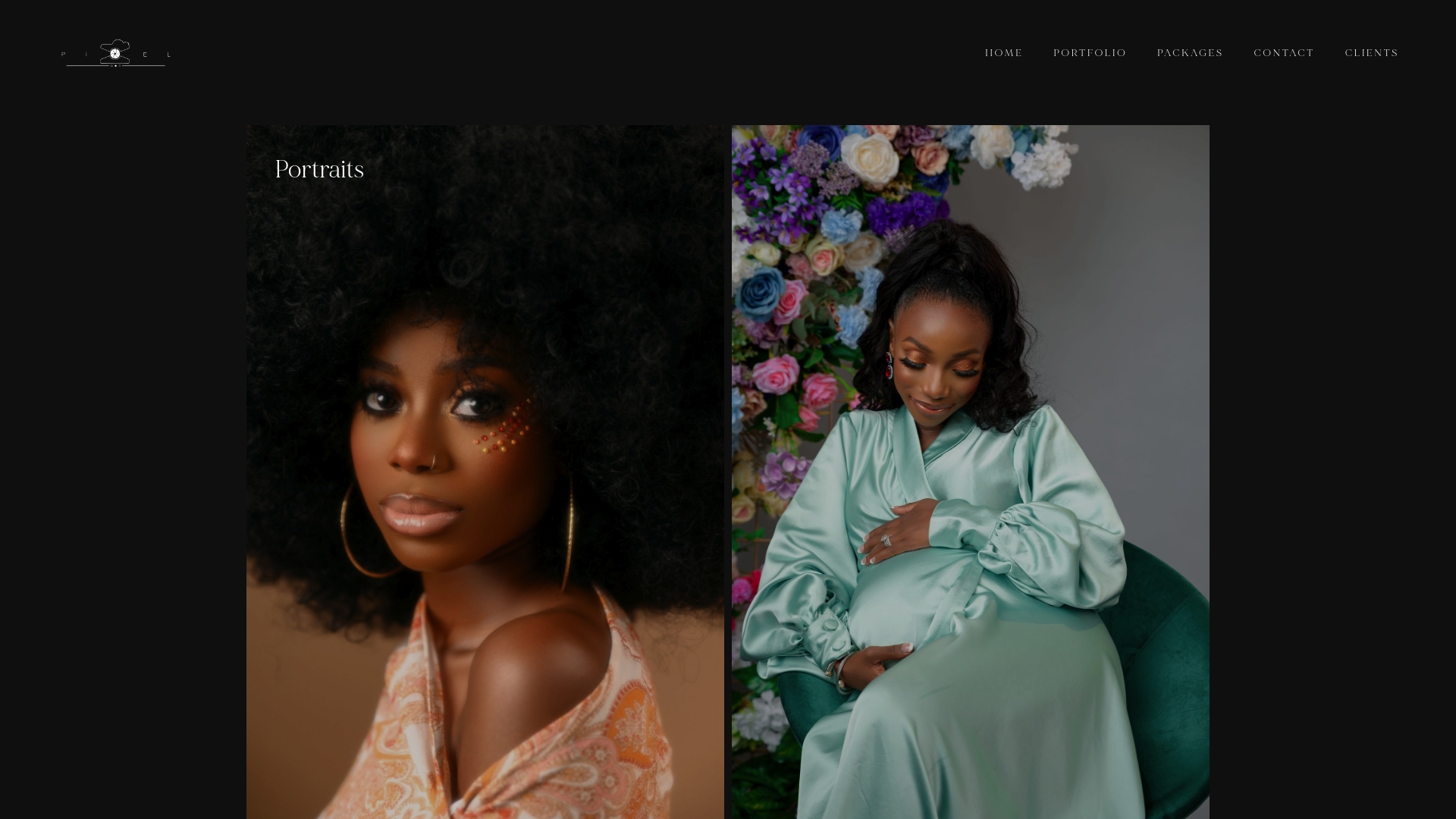
That coverage includes checking your venue's sun angle in advance, agreeing a shot list before the day, and having a second shooter available so candid reception moments still get captured while the two of you slip away for portraits. If your current quote only covers part of the day, ask directly whether sunset falls inside the booked hours, shorter packages can mean the photographer leaves before the sky turns, and that's an easy problem to avoid at the booking stage. Have a look at the wedding photography packages and get in touch to check availability for your date.
Useful tools for planning your sunset shots
- A sun-tracking app for your exact venue and date (calculates true sunset time and angle)
- The science behind why skies turn red and orange at sunset, useful background for understanding the colour you're chasing
- Pinterest's sunset wedding boards for collecting reference images to send your photographer
- Stock and gallery sites like Pexels for pose and framing inspiration
Frequently asked questions
How long before sunset should we start our couple photos? Start around 30 minutes before the sun sets, giving you time to move through your shot list while the light is still soft, then a quick final shot right at sunset if the sky colours up.
What if our photographer's package ends before sunset? Ask directly whether your coverage hours include your local sunset time for your wedding date. If not, extend coverage or move your ceremony earlier, missing this window is one of the most common regrets couples report afterwards.
Do we need a reflector or extra lighting? Not always, but a simple gold or white reflector helps fill shadows once direct light fades, and it costs your photographer almost nothing to bring along.
What if it's windy or overcast on the day? Cloud cover often produces richer, moodier colour rather than ruining the shot, and moderate wind can add movement to a veil or dress. Your photographer should have a sheltered backup spot ready regardless.
Can we get good sunset photos with just a phone? Yes, lock your exposure and focus by tapping the screen, avoid heavy filter presets since the light is already warm, and angle slightly toward the sun for natural flare.
Sources
- Golden Hour in Photography & Sunset Wedding Photos
- Sunset Wedding at The Tides Estate | Real NJ Weddings
- Why Sunset Photos Are A MUST On Your Wedding Day - Alexandra Knight Photography
- The Glow Up: How to Get Perfect Sunset Wedding Pics - Images By Nic
- Why does the sky change colour at sunset? — National Geographic